The big windowpane

HU_trium

ENGLISH

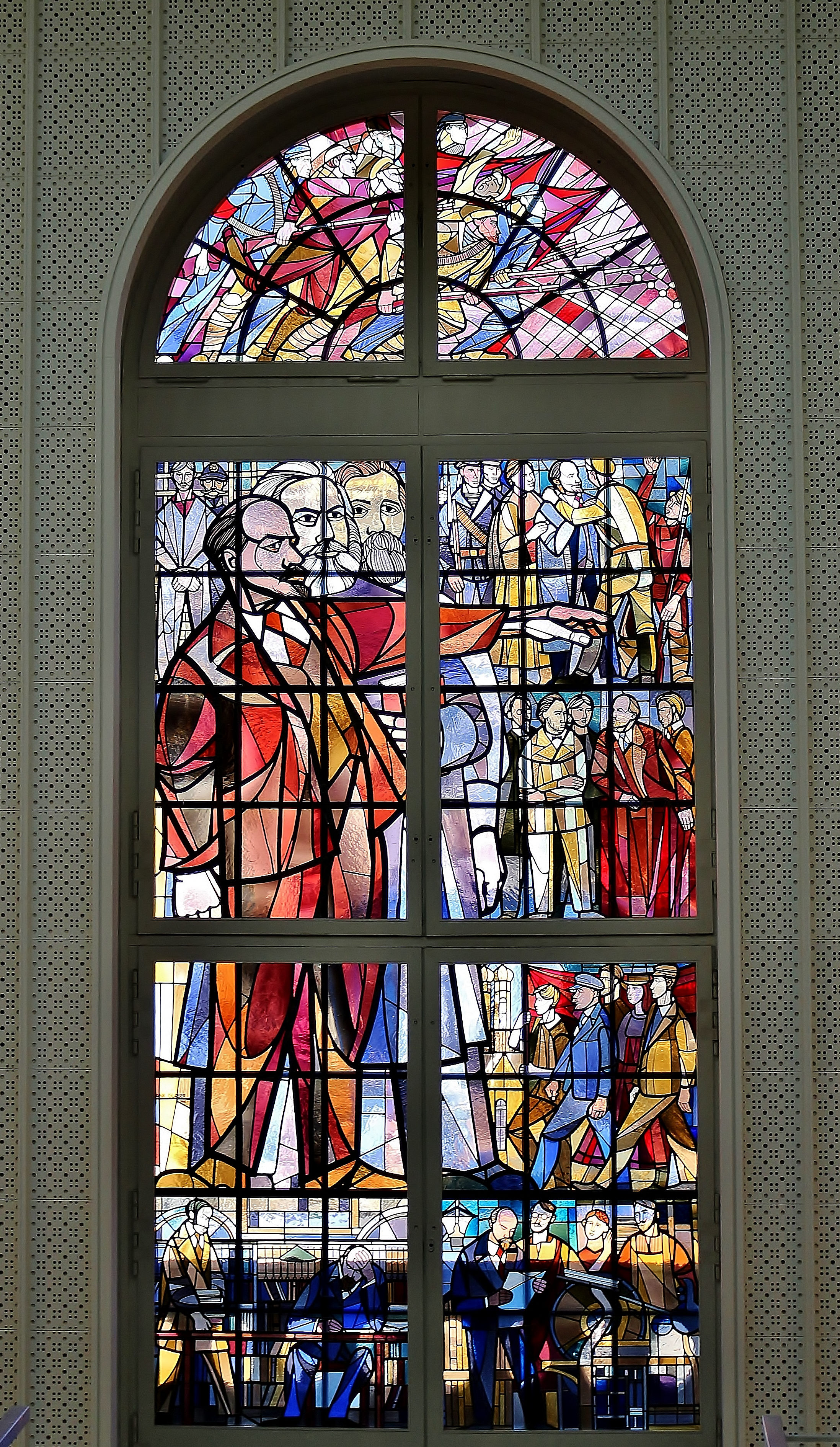
3HUWhen he was young, Lenin had to read and investigate in far stranger places than a university library. From December 1895 until February 1897 he stayed 14 month in a remand prison accused of political agitation, so he had to carry on with his researches behind bars. It’s been told that his first political essays were written there with invisible ink. In February 1897 he was proscribed for three years to the little town of Shushenskoje in Eastsibira (approximately 600 km from the nearest train station), where he set up a little study-room in the little house, in which he lived under constant surveillance of the police, with the purpose of continuing his investigations and his own writings. But it wasn’t until 1900, when he left Russia and began his European exile, that he was able to return to his routine of visiting libraries, in order to work quietly among the smell of old books. Weiterlesen

A heroic rescue

Lenin_bydchantzaras1

In October of 1943 a train coming from the Russian city of Pushko arrived at the train-station of Eisleben. The wagons were filled with scrap metal bulky metallic objects, spoils of war from the German invasion of the Soviet Union. The whole shipment was meant to be taken to the Krughütte, a production plant nearby, in order to be melt down. The soviet forced laborers, which were unloading the wagons, didn’t believe their eyes, as they suddenly found in middle of bells, artillery shells and pieces of boats a three meter high statue of Lenin, made of bronze. Their national hero had come to support them in these hard times – it was a miracle! They decided to hide the statue under a mountain of scrap and saved it from destruction. Weiterlesen

Lenin in West-Berlin

Die Geldmauer

ENGLISH

The only statue of Lenin in West-Berlin and the only monument dedicated to the soviet revolutionary in the territory of the former Federal Republic of Germany is standing on a layer of gravel in middle of trucks and containers in the parking lot of the moving company “Zapf”. The story of this bronze-statue is marked by a certain mysteriousness, which we can actually find quite often, when referring to the figure of Lenin. Weiterlesen

The contemplative Lenin of Gera

Rotesockegera

ENGLISH

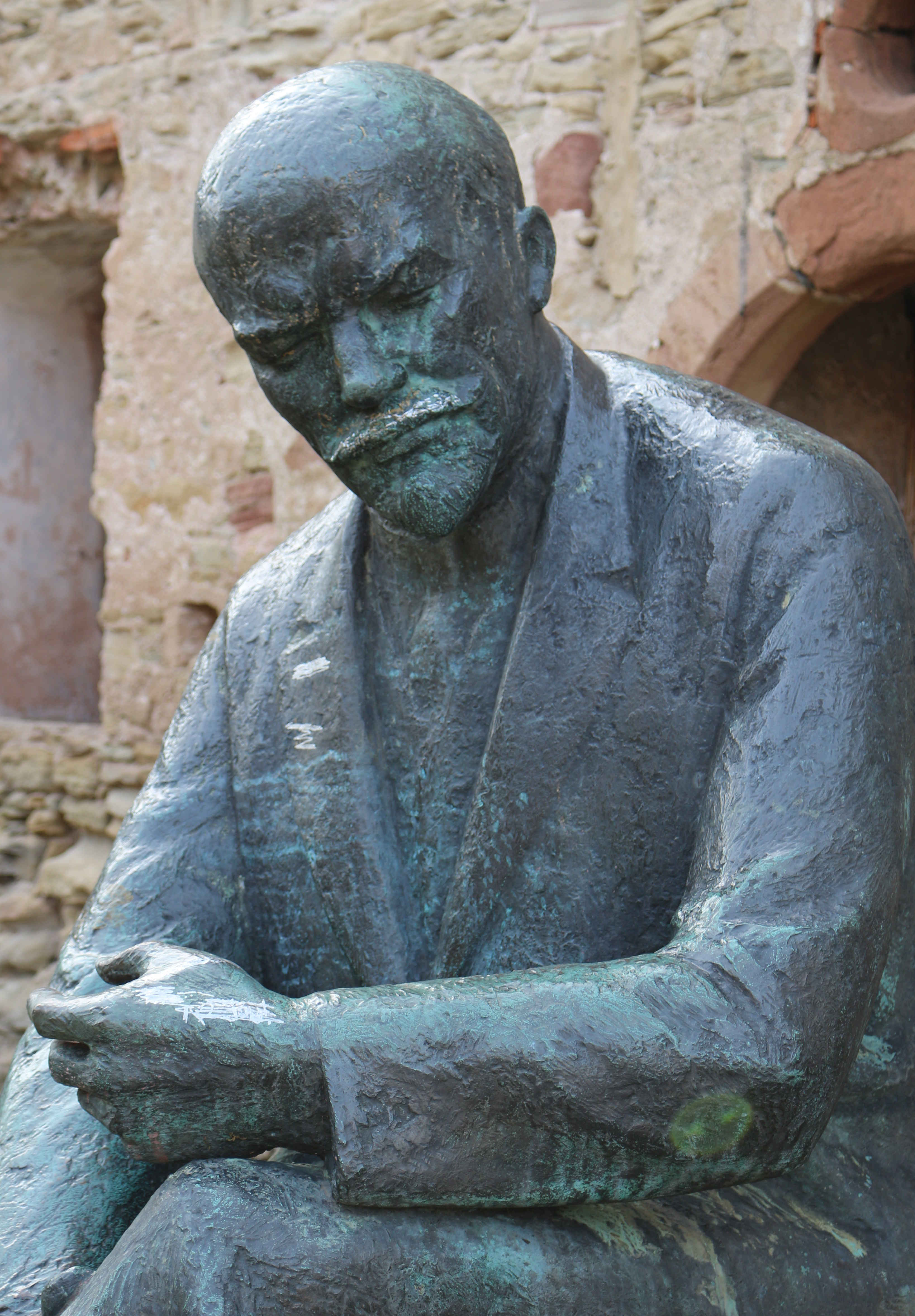
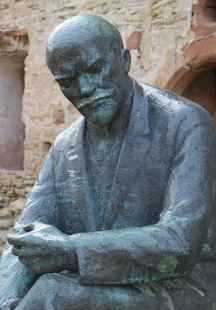
ContemplationIn the form of a statue, Lenin is known almost exclusively in a heroic pose and with a serious look – the great founder of the first socialist state in the world. But in Gera we can find something completely different: In a shady corner in the backyard of the historical court complex in the district of Untermhaus, Lenin is sitting with a very human, quotidian posture and a thoughtful expression. It’s not a big hero, who is represented, but rather a thinker. And the knitted red sock on his left foot definitely completes the uniqueness of this figure, which seems more an existential piece of art than an image of a politic revolutionary. But it’s doubtful that the red sock actually intended to complete this piece of art. It’s rather probable, that this little piece of clothing knitted by the members of a cabaret group, which plays here in the summer season, is a satirical allusion to the pejorative expressionred sock„, used in the past to ridicule left orientated politicians. Weiterlesen

In abandoned Little-Moscow

ENGLISH

In every corner of the little town of Wünsdorf you can still find traces of the Soviet occupation. Here was located the biggest military area of the Red Army outside the Soviet Union: 590 hectares with 1000 buildings were surrounded by a wall of concrete, and completely inaccessible to the German population. More than 50 000 Soviet soldiers and civilians were living here and there were daily trains directly from the so called “Russian Station” to Moscow. But actually the military use of this territory began much earlier: In the beginning of the 20th century an infantry school was built here. During the III. Reich it was expanded by the Wehrmacht, who installed many important services here such as the intelligence headquarters. In 1945 the Red Army conquered this complex and a few months later the high command of the Soviet Forces in Germany moved to Wünsdorf and continued to expand the military area so that outside the large wall there were still 6.200 hectares for military training being used by the occupying forces. During the times of the GDR, Wünsdorf used to be called the “Little Moscow“. Weiterlesen

Standing on Hitler’s red granite

Lenin watching football
ENGLISH
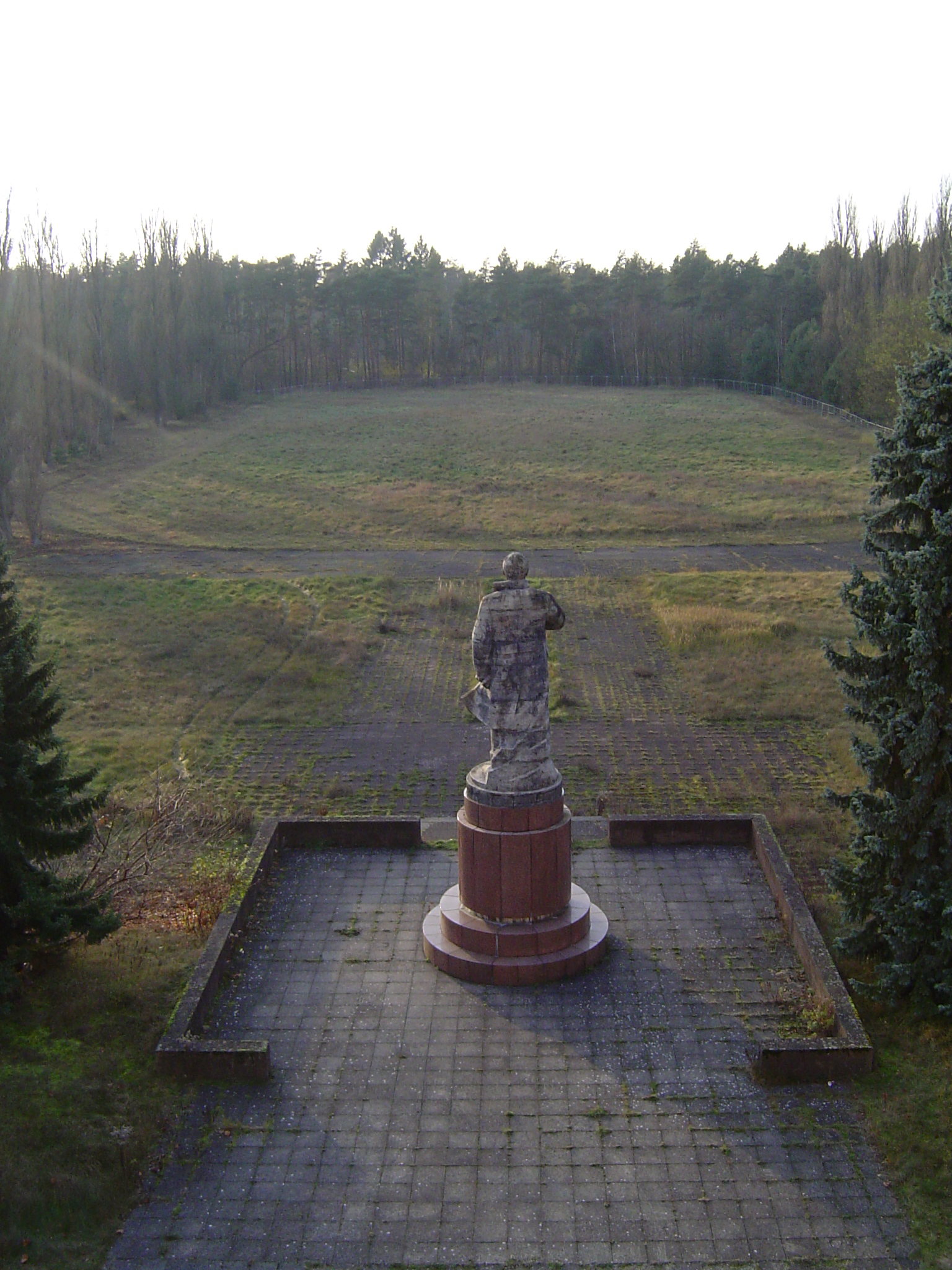
From the top of his red colored pedestal the stone-faced Lenin is looking at the abandoned sports field, which was also used as a parade ground. Once upon a time, soldiers used to march here in neat uniforms and greet their hero with dignity and respect, but now the communist revolutionary can only address himself to the trees and bushes. This entire complex is a representation of oblivion, in which you can still though perceive a glint of the past glamour of the headquarter of the Soviet Army in Germany. Weiterlesen

At the Gate to the north

Gekritzel at night

ENGLISH

Porto1The train, which left Zurich the 9th of April 1917, returning a group of Russian socialists, which were living in exile, back to their home country is one of the most important happenings in the 20th century history: This was the train, which took Lenin to Russia, where he would use the politic instability in order to put into practice his revolutionary plans, prepared for year in the libraries and political circles of Zurich. This train crossed Germany from the Swiss border to Sassnitz, where it was loaded on a ferry boat and driven to Sweden, from where ir would finally head towards Petrograd (today St. Petersburg). The Austrian author Stefan Zweig wrote a short-story about this historical episode, which is part of his book Sternstunden der Menschheit. Weiterlesen

Lenin or the moon

Vor dem Spielplatz

ENGLISH

BurritoThe relief image is crumbling apart and shows several dirt smudges and fissures. Without nose and with many craters, the supposed human head looks rather like an abstract and imaginative representation of the moon, which would actually fit better with the swings and monkey bars in the background. But in fact it is Lenin, who is standing here at the entrance to the huge park Bürgerheide in the small city of Finsterwalde and keeps watch over the playground. Weiterlesen

The red star over the city of Halle

Star

ENGLISH

The risingFrom behind star of Lenin’s socialism is still scintillating in the city of Halle: In the Pestalozzi Park you can find an old monument, which shows Lenin’s head on a star, floating over the earth. Our planet is placed at the top of three books, which contain a formula developed by the Soviet revolutionary: „Soviet power + Electrification = Communism”. It refers to the importance of the process of electrification in the beginning of the 20th century or the economic growth of the entire country. In 1920 the government created the „State Commission for Electrification of Russia“ and in 10 years the production of electricity increased tenfold. Weiterlesen