In a small park in Strausberg there is still standing a stone slab with a relief reminding the Communist Revolution in 1917. It was unveiled in April of 1970 on the occasion of Lenins 100th birthday. Around the central figure of Lenin there is a group of attentive listeners, including some soldiers and seaman recruits. Lenin is surrounded by exactly 12 persons, which could be seen as an allusion to Jesus’ apostles, particularly having in account that the honors to the Soviet hero often show parallel features to the worship of saints and concretely to the representation of Jesus Christ. In reality the image shows the historical meeting on October 23 of 1917 (after the Gregorian calendar), which served as preparation for the revolution. Persecuted by the authorities, Lenin managed to return secretly to Petrograd and met 12 members of the Central Committee of the Bolshevik party, in order to plan the seizure of power. Weiterlesen
Schlagwort: Lenin
Lenins Losung am ehemaligen Flugplatz
Lenin, Marx und Engels formten zu DDR-Zeiten ein allgegenwärtiges Triumvirat des Sozialismus, heutzutage sind sie auf deutschem Territorium jedoch kaum gemeinsam vorzufinden. Eine Ausnahme ist das Gelände des ehemaligen Flugplatzes in Köthen: An einer großen Halle kann man noch ihre Abbildungen als simple zweifarbige Wandbilder sehen. Weiterlesen
Lenin‘s slogan at the former airfield
During the GDR, Lenin, Marx and Engels were an omnipresent triumvirate of Socialism, but nowadays it has become really difficult to find them together on German soil. The former airfield in Köthen is one of those few exceptions: At the exterior wall of a big pavilion you can still find their image as simple two-color wall-paintings. Weiterlesen
Vor dem Würstchen-Imbiss
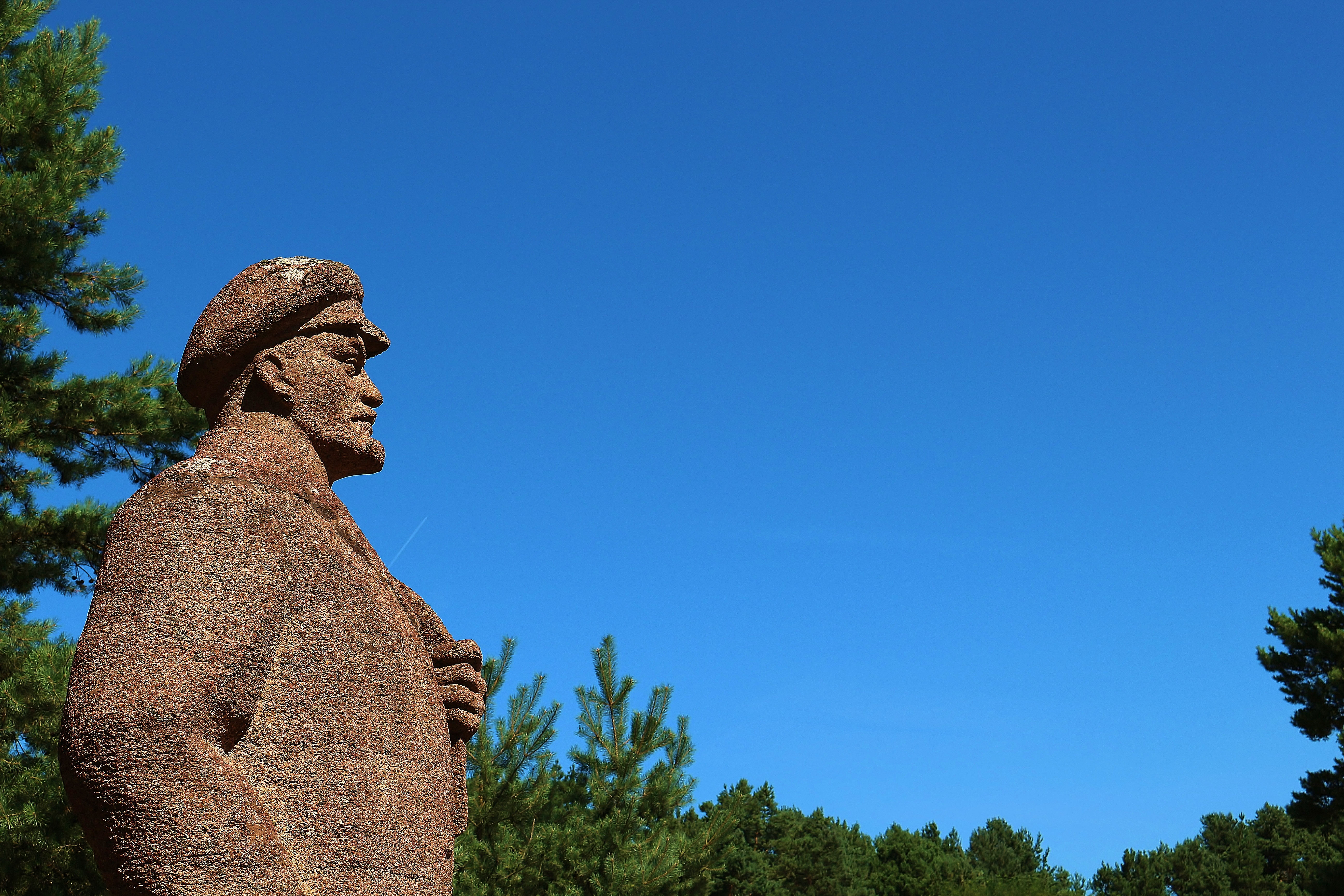
Obwohl der Stil des sowjetischen Realismus, der die öffentlichen Denkmäler mit politischer Relevanz im gesamten Ostblock prägte, nicht gerade für seine Mannigfaltigkeit bekannt war, so ist es doch erstaunlich, in wie vielen verschiedenen Formen man Lenin hat darstellen können. Bei der über 3 Meter hohen Eberswalder Leninstatue aus rotem Granit wird die sonst im Vordergrund stehende Rolle des starken Staatsmanns nicht besonders pathetisch hervorgehoben, sondern man sieht einen etwas träumerischen Denker: Mit einer Hand in der Rocktasche und der anderen am Revers verliert sich Lenins Blick in der Ferne. Er trägt die für ihn charakteristische schwedische Fischersmütze, die er 1917 während seines kurzen Aufenthalts in Stockholm kaufte, als er nach dem langen Exil nach Russland zurückkehrte, und sieht ein bisschen dicker aus, als man es von anderen Darstellungen gewöhnt ist. Von den unverkennbaren Gesichtszügen abgesehen, könnte es genauso gut die Figur eines skandinavischen Fischers sein, der auf das weite Meer hinausschaut… Weiterlesen
In front of the food-stand
Though the style of Soviet Realism, which dominates amongst the public monuments with politic relevance in the entire Eastern Block, was not precisely known for its variety, it’s quite surprising, in how many different forms it was able to represent Lenin. For instance in the 3 meters statue of Eberswalde made of red granite, the role of strong statesman isn’t specially emphasized, being Lenin rather presented as a dreamy thinker: With one hand in the pocket and the other grabbing his coat collar, his glance gets lost in the distance. He is wearing the Swedish fisherman cap, which he bought in 1917 in Stockholm, on his way back to Russia after many years of exile in Central Europe, and looks a little bit fatter than usual. If it wasn’t for the unmistakable facial features, one could think to be standing in front of the figure of a Scandinavian Fisherman, looking into the infinite ocean…
What is to be done?
ENGLISH
The view over the impressive statue of Lenin in the district of Großer Dreesch in the city of Schwerin looks like a postcard from the past. With his hands in the pockets and his venturous look, the communist idol stands in the middle of an unvaried landscape of Soviet architecture and long parallel avenues. Weiterlesen
X-files (2): The mysterious bust
A statue, which is under monument protection, but disappears without a trace. An old and forgotten bust, which suddenly is standing at the entrance of the Volkspark. Lenin’s existence in Potsdam is a succession of mysterious incidents and even journalists, politicians and public authorities lose track of it. But let’s analyse these paranormal phenomena closely… Weiterlesen
The big windowpane
ENGLISH
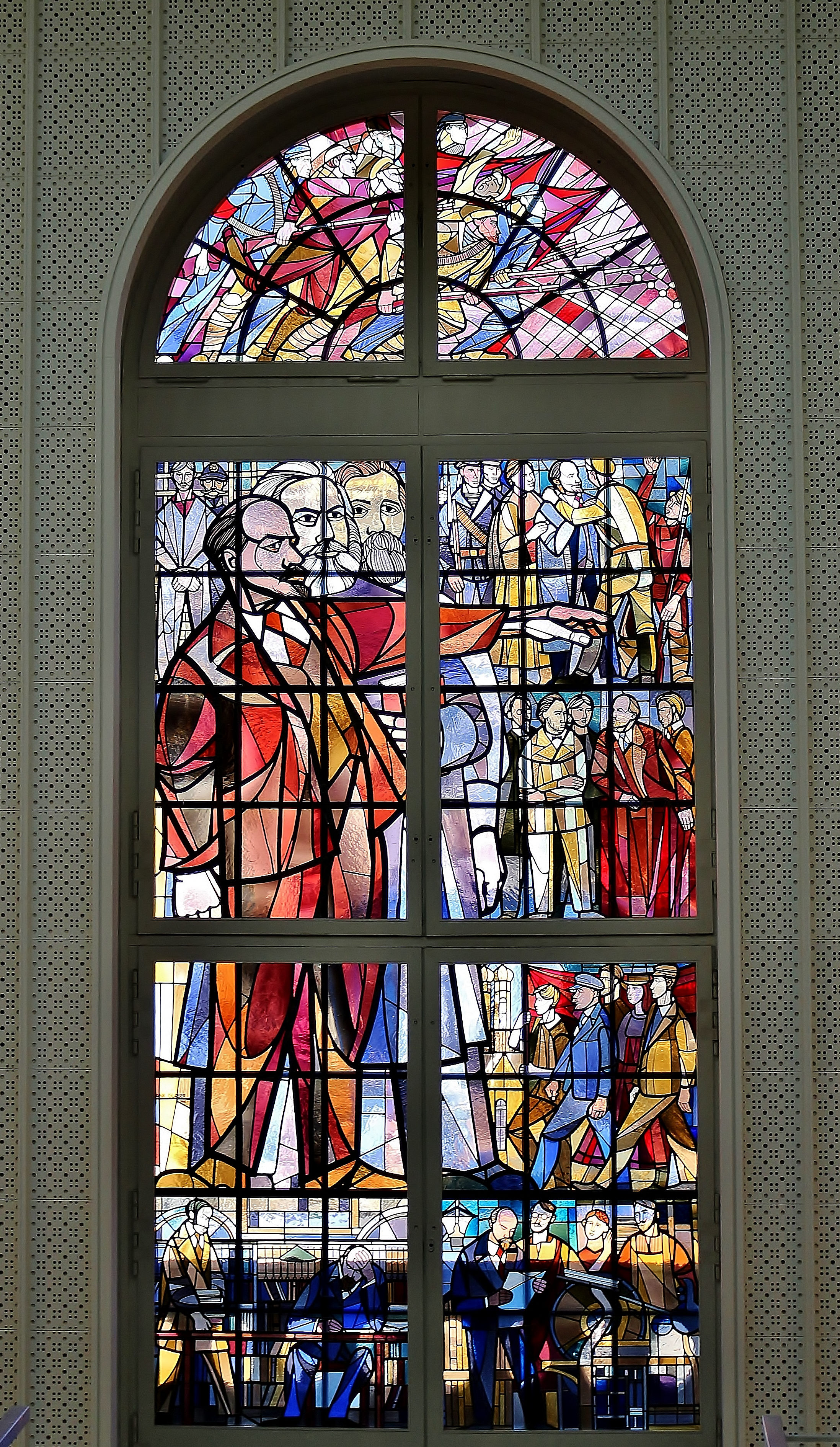
When he was young, Lenin had to read and investigate in far stranger places than a university library. From December 1895 until February 1897 he stayed 14 month in a remand prison accused of political agitation, so he had to carry on with his researches behind bars. It’s been told that his first political essays were written there with invisible ink. In February 1897 he was proscribed for three years to the little town of Shushenskoje in Eastsibira (approximately 600 km from the nearest train station), where he set up a little study-room in the little house, in which he lived under constant surveillance of the police, with the purpose of continuing his investigations and his own writings. But it wasn’t until 1900, when he left Russia and began his European exile, that he was able to return to his routine of visiting libraries, in order to work quietly among the smell of old books. Weiterlesen
Lenin in death row
ENGLISH
Vogelsang, the name sounds very poetic and the landscape around this little village in the region of Oberhavel is quite idyllic. The forest with its tall trees could be part of a fairy tale and actually it conceals some hidden surprises. If you walk from Vogelsang heading north you will get to the ruins of a desolate and decaying military area. During the times of the Democratic Republic of Germany it belonged to the soviet army and there were up to 15.000 soldiers and civilians living in these buildings. During the climax of Cold War nuclear missiles were kept in Vogelsang, in order to be able to attack Paris and London, if the situation would get serious. After using this area for almost 40 years, the soviet army abandoned it in 1994. For two decades it served as exotic, alternative and – because of the rest of ammunition that was spread all around the area – totally forbidden – therefor more demanded tourist attraction. Weiterlesen
A ghostly appearence
ENGLISH
If you go for a walk in the Steinförder Straße in Fürstenberg, you can enjoy the fresh air, the view over the big lake Röblinsee and the bucolic calmness. Most of the houses were recently rehabilitated and next to the garage for the station wagon, you also have a parking lot for the boat – what a noble idyll! But just after the cross with the Waldweg you can see a spot with wild growing trees and bushes. If you take a look behind this picturesque setting, you will find the dusky shadow of a past, that doesn’t want to let go. The main trace of these agitated memories is the ruin of the Officer’s House with the inevitable statue of comrade Lenin. The flaking figure stands here like a ghost as a discomposing witness of past turbulences… Weiterlesen