In a small park in Strausberg there is still standing a stone slab with a relief reminding the Communist Revolution in 1917. It was unveiled in April of 1970 on the occasion of Lenins 100th birthday. Around the central figure of Lenin there is a group of attentive listeners, including some soldiers and seaman recruits. Lenin is surrounded by exactly 12 persons, which could be seen as an allusion to Jesus’ apostles, particularly having in account that the honors to the Soviet hero often show parallel features to the worship of saints and concretely to the representation of Jesus Christ. In reality the image shows the historical meeting on October 23 of 1917 (after the Gregorian calendar), which served as preparation for the revolution. Persecuted by the authorities, Lenin managed to return secretly to Petrograd and met 12 members of the Central Committee of the Bolshevik party, in order to plan the seizure of power. Weiterlesen
Schlagwort: Monument
In front of the food-stand
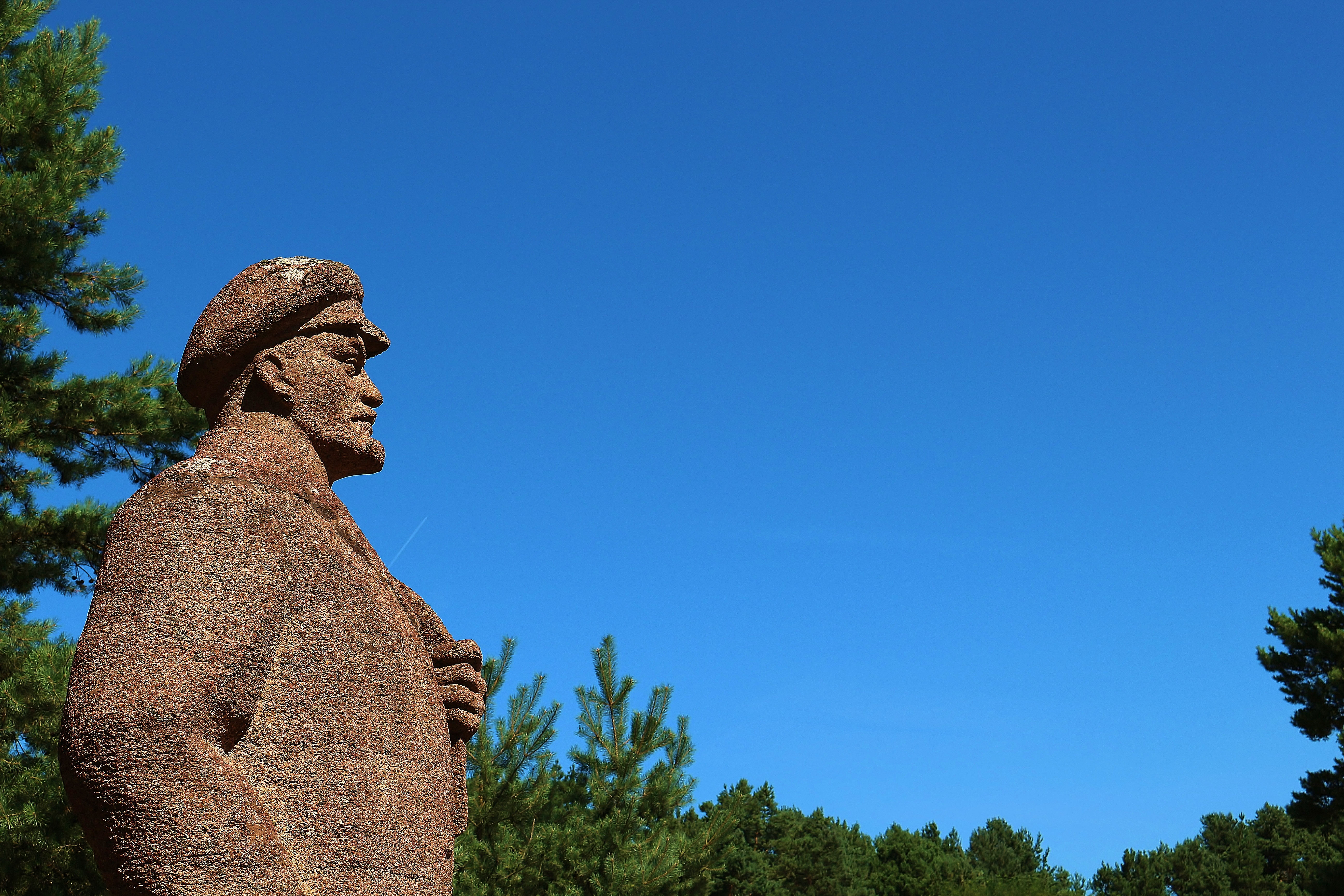
Though the style of Soviet Realism, which dominates amongst the public monuments with politic relevance in the entire Eastern Block, was not precisely known for its variety, it’s quite surprising, in how many different forms it was able to represent Lenin. For instance in the 3 meters statue of Eberswalde made of red granite, the role of strong statesman isn’t specially emphasized, being Lenin rather presented as a dreamy thinker: With one hand in the pocket and the other grabbing his coat collar, his glance gets lost in the distance. He is wearing the Swedish fisherman cap, which he bought in 1917 in Stockholm, on his way back to Russia after many years of exile in Central Europe, and looks a little bit fatter than usual. If it wasn’t for the unmistakable facial features, one could think to be standing in front of the figure of a Scandinavian Fisherman, looking into the infinite ocean…
Red carnations for Lenin
Since the 19th century, red carnations have been considered a symbol of the international labor movement: Back then they were carried out by the participants of illegal meetings in Germany and France. During the period of the Cold War these flowers would become a distinctive mark of Socialist ideology in the Soviet Union and Eastern Europe. To celebrate special holidays, people would put them down – and actually still do nowadays – at the grave of soldiers fallen in war or in front of monuments dedicated to the adored state-idols. In Nohra, on a sunny spring day, we found red carnation lying in front of the statue of Lenin. They were not real, but plastic-flowers, maybe because they are cheaper and last longer. Weiterlesen
Dornen
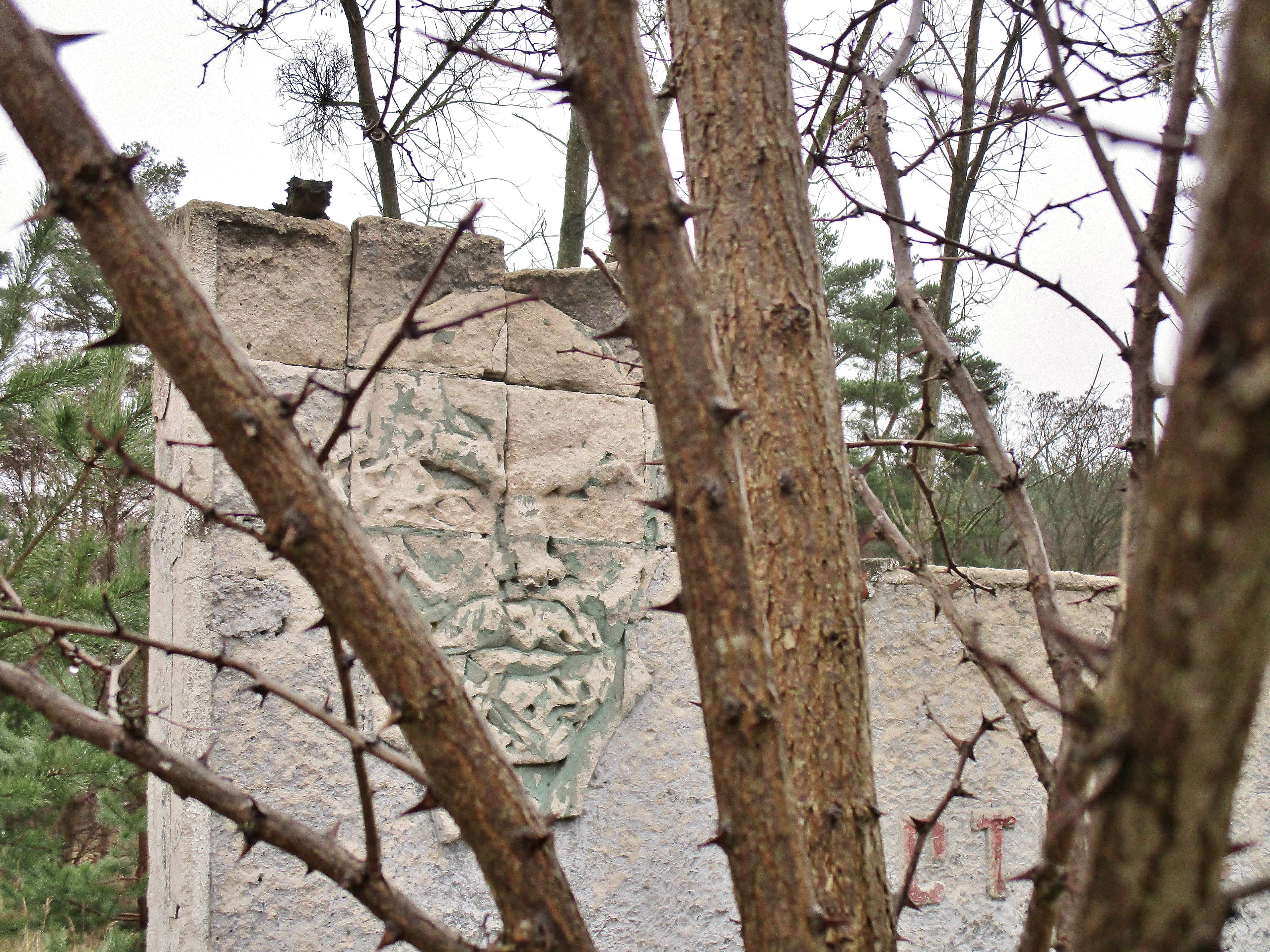
An der Bundesstraße 96 kurz vor der Einfahrt nach Fürstenberg stehen zwei große Reliefwände als offenes und freizugängliches Überbleibsel der sowjetischen Besatzung. Es ist ein historisches Zeugnis zum Sehen, Lesen und Anfassen, an dem man die heroische Selbstdarstellung der Roten Armee als Siegermacht des II. Weltkriegs betrachten kann und an dem man so manches über die idealen Projektionen für die Nachkriegszeit erfahren kann. Das Monument ist verlassen und zerbröckelt vor sich hin, was wiederum viel über den aktuellen Umgang mit der ostdeutschen Vergangenheit aussagt: Von dem sowjetischen Heldentum möchte man nichts mehr wissen, auch nicht wenn es sich um die Befreiung Deutschlands vom Nationalsozialismus handelt. Immerhin hat man dieses Denkmal nicht dem Erdboden gleichgemacht, sodass sich auch heute noch Historiker, Flaneurs und neugierige Gemüter an ihm ergötzen können. Weiterlesen
Thorns
Next to the national road B96 before entering Fürstenberg you can find two big relief walls, a free accessible remnant from the Soviet presence in Germany. It is an historical testimony to see, read and touch, that shows the glorious portrait of the Red Army as the big winner of World War II and also the ideal Communist projection for the post-war period. The monument is abandoned and falling apart, what in turn reflects the current dealing with the East-German past: Nobody wants to know anything about the Soviet heroism, not even about the liberation of Berlin from National Socialism accomplished by the Red Army in 1945. At least this memorial wasn’t demolished, so that even nowadays historians, strollers and curious persons still have the chance to get delighted by this relic. Weiterlesen
White Lenin
A Berlin tourist guide once told me, that the first place he visited with his groups from the USA was the Soviet War Memorial: “So they can see, that in Berlin they can to expect the unexpectable!” In fact, from a Western perspective the monument is quite disconcerting or even a little bit bizarre: The nationalistic pathos and the communist symbolism create a flourishing tribute to Soviet patriotism, which many would not expect to find in the heart of Europe in the 21th Century. Weiterlesen
Der weiße Lenin
Ein Berliner Touristenführer erklärte mir mal, er würde seine Gruppen von US-amerikanischen Besuchern als Allererstes zum Sowjetischen Ehrenmal bringen: „Damit sie sehen, dass man in Berlin das Unerwartbare erwarten kann.“ Tatsächlich ist die Gedenkstätte im Treptower Park aus westlicher Sicht befremdend, wenn nicht sogar ein bisschen bizarr: Das nationalistische Pathos und die kommunistische Symbolik entfalten sich mit großer Pracht und bilden ein Monument der Huldigung des sowjetischen Patriotismus, wie manch einer es im Herzen Europas am Anfang des XXI. Jahrhunderts vielleicht nicht mehr erwartet hätte. Weiterlesen
Lenin stays
ENGLISH
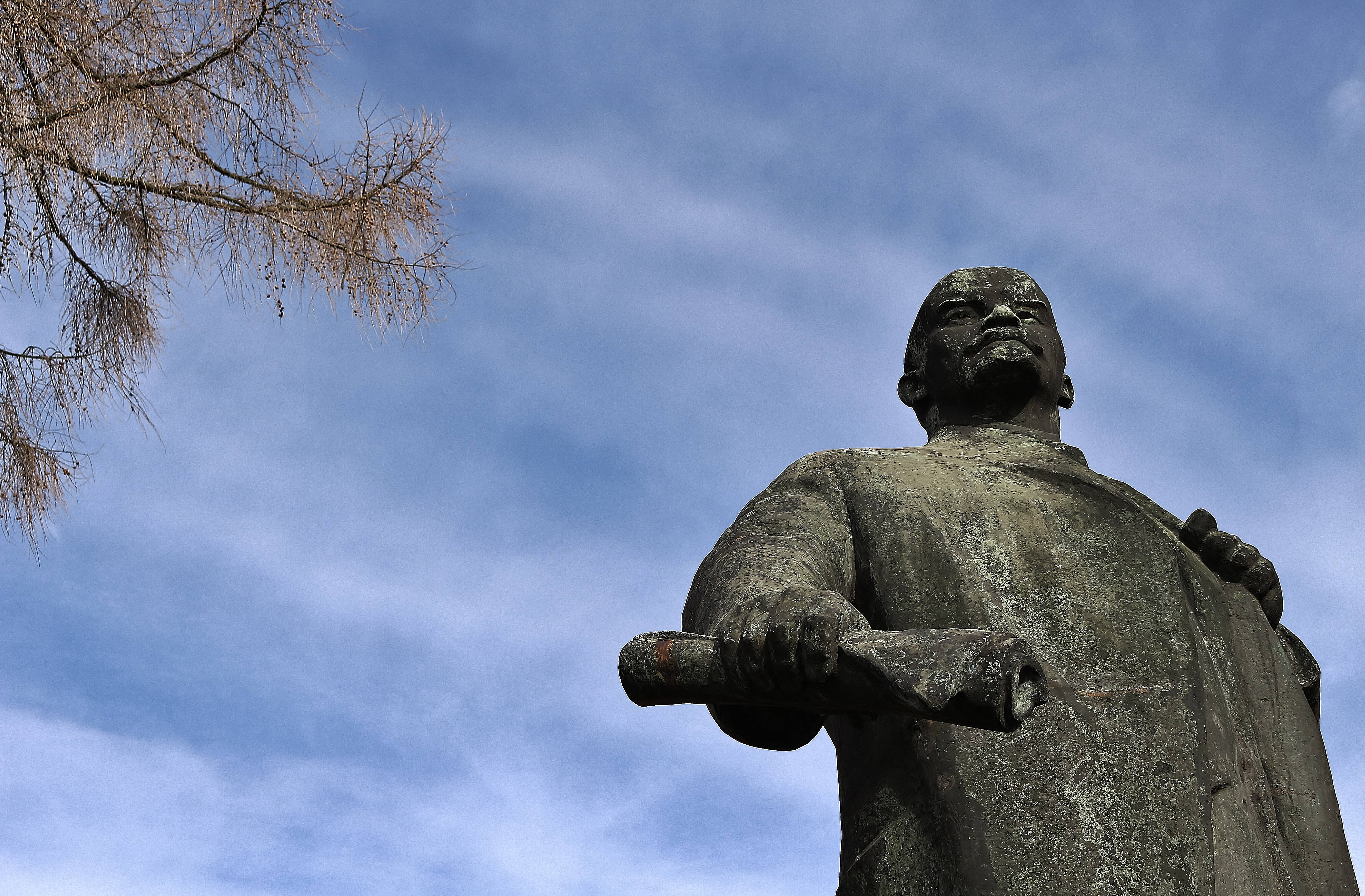
While many of the last monuments dedicated to Lenin in Germany are in danger of being demolished or crumbling away in front of an abandoned barrack, the Lenin in Riesa has guaranteed a safe and well-tended existence. Since 1991, when the figure was moved into the little park next to some Soviet war graves, there is no longer any threat. It can stay there as heroic sentry and enjoy the sun and fresh air. Analyzing the statue, one could think, that behind the iron expression there is a light smile on Lenin’s face: Probably he is just glad about the ironic and happy end of the story of his overhasty removal from the former Lenin Square.
WeiterlesenLenin bleibt
DEUTSCH
Während viele von den letzten Lenindenkmälern auf deutschem Boden abrissgefährdet sind oder einsam vor einer verlassenen Kaserne zerbröckeln, genießt Riesas Lenin eine sichere und gepflegte Existenz. Seitdem er 1991 in die sowjetische Kriegsgräberstätte gebracht wurde, bestehen für ihn keinerlei Gefahren mehr. Er darf als heldenhafte Schutzfigur an einer kleinen aber schmucken Parkanlage stehen und sich an der Frühlingssonne ergötzen. Wenn man seinen Gesichtsausdruck genau betrachtet, erkennt man hinter seiner eisernen Miene ein leichtes Lächeln: Wahrscheinlich freut er sich darüber, wie glücklich die Geschichte seiner übereilten Beseitigung von dem ehemaligen Leninplatz – seiner vielen Feinde zum Trotz – doch letztendlich ausgegangen ist…
WeiterlesenWhat is to be done?
ENGLISH
The view over the impressive statue of Lenin in the district of Großer Dreesch in the city of Schwerin looks like a postcard from the past. With his hands in the pockets and his venturous look, the communist idol stands in the middle of an unvaried landscape of Soviet architecture and long parallel avenues. Weiterlesen