Lenin in death row

41

ENGLISH

Vogelsang, the name sounds very poetic and the landscape around this little village in the region of Oberhavel is quite idyllic. The forest with its tall trees could be part of a fairy tale and actually it conceals some hidden surprises. If you walk from Vogelsang heading north you will get to the ruins of a desolate and decaying military area. During the times of the Democratic Republic of Germany it belonged to the soviet army and there were up to 15.000 soldiers and civilians living in these buildings. During the climax of Cold War nuclear missiles were kept in Vogelsang, in order to be able to attack Paris and London, if the situation would get serious. After using this area for almost 40 years, the soviet army abandoned it in 1994. For two decades it served as exotic, alternative and – because of the rest of ammunition that was spread all around the area – totally forbidden – therefor more demanded tourist attraction. Weiterlesen

In abandoned Little-Moscow

ENGLISH

In every corner of the little town of Wünsdorf you can still find traces of the Soviet occupation. Here was located the biggest military area of the Red Army outside the Soviet Union: 590 hectares with 1000 buildings were surrounded by a wall of concrete, and completely inaccessible to the German population. More than 50 000 Soviet soldiers and civilians were living here and there were daily trains directly from the so called “Russian Station” to Moscow. But actually the military use of this territory began much earlier: In the beginning of the 20th century an infantry school was built here. During the III. Reich it was expanded by the Wehrmacht, who installed many important services here such as the intelligence headquarters. In 1945 the Red Army conquered this complex and a few months later the high command of the Soviet Forces in Germany moved to Wünsdorf and continued to expand the military area so that outside the large wall there were still 6.200 hectares for military training being used by the occupying forces. During the times of the GDR, Wünsdorf used to be called the “Little Moscow“. Weiterlesen

Standing on Hitler’s red granite

Lenin watching football
ENGLISH
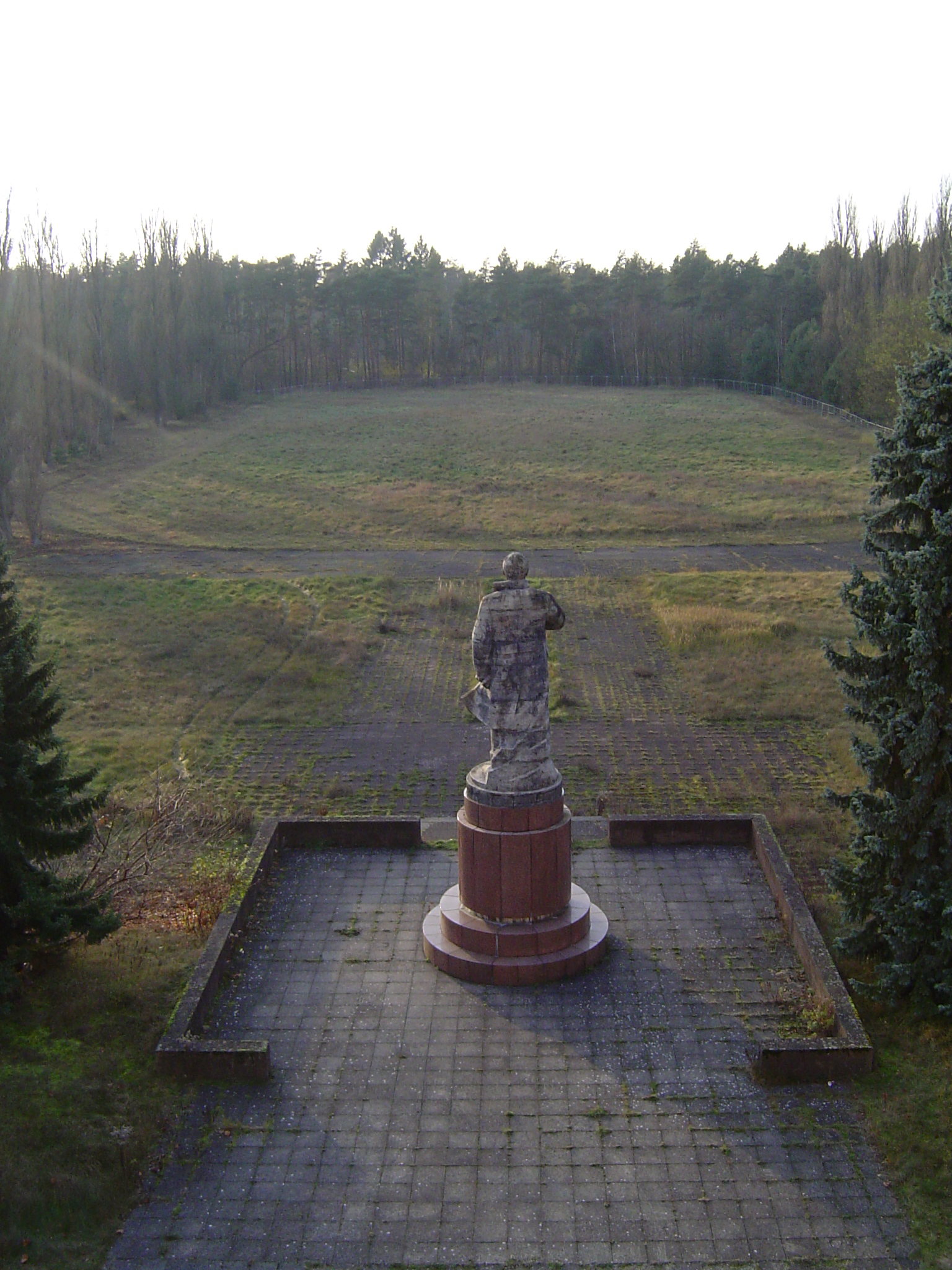
From the top of his red colored pedestal the stone-faced Lenin is looking at the abandoned sports field, which was also used as a parade ground. Once upon a time, soldiers used to march here in neat uniforms and greet their hero with dignity and respect, but now the communist revolutionary can only address himself to the trees and bushes. This entire complex is a representation of oblivion, in which you can still though perceive a glint of the past glamour of the headquarter of the Soviet Army in Germany. Weiterlesen

Lenin or the moon

Vor dem Spielplatz

ENGLISH

BurritoThe relief image is crumbling apart and shows several dirt smudges and fissures. Without nose and with many craters, the supposed human head looks rather like an abstract and imaginative representation of the moon, which would actually fit better with the swings and monkey bars in the background. But in fact it is Lenin, who is standing here at the entrance to the huge park Bürgerheide in the small city of Finsterwalde and keeps watch over the playground. Weiterlesen

In the shrubbery

Im Schatten

ENGLISH

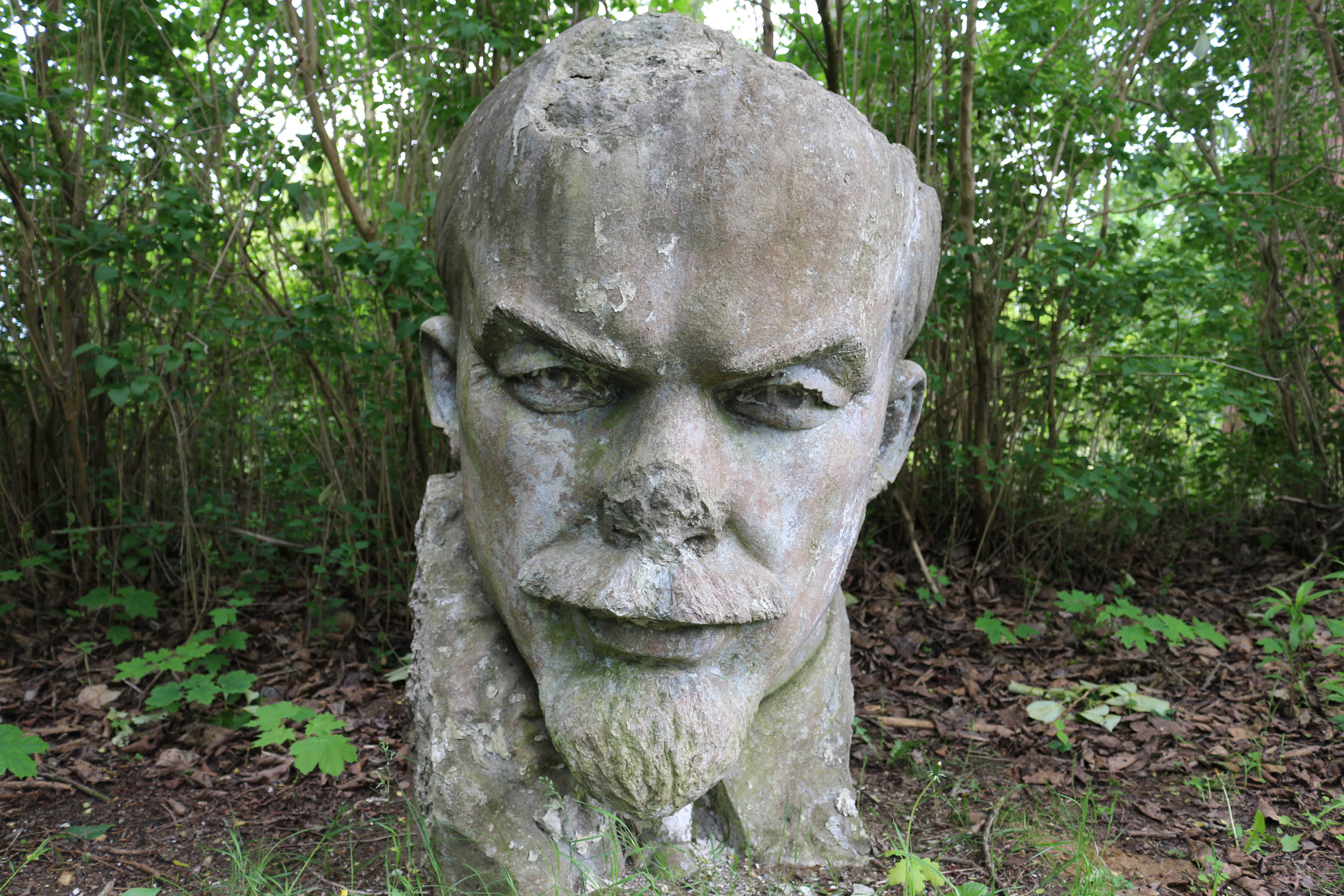
It’s quite impressive to see Lenin’s head on the Peetscher Höhe in Fürstenberg, staying alone behind a bush in middle of a wild growing meadow. Surrounded by shrubberies and trees he seems to have camouflaged himself in this remote hiding place. And actually that makes sense: After the German reunification most of the remains of the Soviet military forces in Fürstenberg have been removed or destroyed, including several monuments dedicated to Lenin. But here, seeking shelter in no man’s land, forgotten by supporters and detractors, he seems to have found a safe place to be. Weiterlesen

A ghostly appearence

RUHM.90

ENGLISH

GelbIf you go for a walk in the Steinförder Straße in Fürstenberg, you can enjoy the fresh air, the view over the big lake Röblinsee and the bucolic calmness. Most of the houses were recently rehabilitated and next to the garage for the station wagon, you also have a parking lot for the boat – what a noble idyll! But just after the cross with the Waldweg you can see a spot with wild growing trees and bushes. If you take a look behind this picturesque setting, you will find the dusky shadow of a past, that doesn’t want to let go. The main trace of these agitated memories is the ruin of the Officer’s House with the inevitable statue of comrade Lenin. The flaking figure stands here like a ghost as a discomposing witness of past turbulences… Weiterlesen

Yellow mosaic in front of spooky soundscape

smilinglenin

ENGLISH

Constructed during the Third Reich, taken over by the Red Army after the war, abandoned in the early 90s. This chronological sequence, typical for many Soviet military areas in East Germany, also applies to the old airport in Brand. This complex is out of use since 1992 and if you walk along its paths it feels like being in a horror movie… Everywhere you look, you find ruins and empty buildings, camouflaged behind the trees that are growing wildly around this area. The soundscape, which accompanies this desolating scenario is specially scaring: windows crunch, squealing panels balance from the ceilings, you hear doors slamming – the little ghost town just can’t find a rest! In the middle of this spooky atmosphere the mosaic of Lenin is like an oasis of vivacity: The strong colors, the harmonic blue and yellow combination and the friendly facial expression of the communist leader form a clear contrast to the dusky surrounding. Weiterlesen